
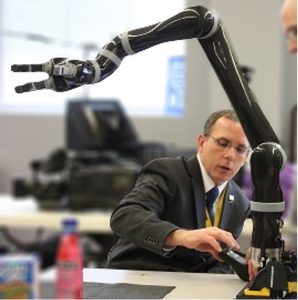
Dr. Rory Cooper, a U.S. Army veteran, Paralympic medalist, biomedical engineer, and inventor, has dedicated his career to developing wheelchair and assistive technologies that improve mobility, independence, and inclusion.
Born in Los Angeles on November 9, 1959, Cooper developed an early interest in engineering while working with his mother in his family’s automotive and repair shop. In 1980, at age twenty, while serving in the U.S. Army in Germany, Cooper was hit by a bus while riding his bicycle, leaving him paralyzed from the waist down. After his injury, Cooper became frustrated with the heavy, difficult-to-maneuver wheelchair he was using, which he later described as an “80-pound behemoth” that was hard to get into a car and broke after only weeks of daily use.
Cooper began designing his own ultralight wheelchair in his family’s shop after enrolling at California Polytechnic State University. He later earned a doctorate in electrical and computer engineering and became a professor and researcher at the University of Pittsburgh. There, he founded the Human Engineering Research Laboratories (HERL), a collaboration between the U.S. Department of Veterans Affairs and the University of Pittsburgh.
Through HERL, Cooper and his team have developed technologies to improve the health and quality of life of people with disabilities, veterans, and service members, including wheelchairs, robotic devices, wearable health technologies, home modifications, home automation, and prosthetics. Cooper’s innovations include advances in both manual and electric wheelchairs, including lightweight wheelchair designs, robotic mobility devices, seat cushions, wearable instruments, and other assistive technologies. One of his patented inventions, U.S. Patent No. 6,276,705, is directed to a wheelchair hand rim designed to improve biomechanical efficiency and reduce the likelihood of injury for manual wheelchair users. Cooper and his team also helped develop robotic wheelchair technologies, including the MEBot chair, which can navigate curbs, stairs, and other obstacles. Other HERL innovations include assistive robotic manipulators, microelectrode brain-machine interfaces, transfer biomechanics, and virtual reality tools designed to address mobility and accessibility challenges.
Cooper’s work has also influenced adaptive sports. As an athlete and engineer, Cooper competed in wheelchair sports and developed innovations for racing wheelchairs, including steering compensators and fenders for racing chairs. He won a bronze medal at the 1988 Paralympic Games and has remained involved with the International Paralympic Committee.
“Accessibility helps drive social inclusion,” Cooper has said, explaining that wheelchairs, adaptive vehicles, and home modifications allow people with disabilities to be “productive and creative and contribute to society.”
Cooper’s contributions have earned national recognition, including induction into the National Inventors Hall of Fame in 2023 for wheelchair technology. He also received the National Medal of Technology and Innovation, the nation’s highest honor for technological achievement, for his contributions to engineering science and assistive technology.
Author: Seung Sub (Elvis) Kim
Photo credit: Photo by Sandboxxenn, via Wikimedia Commons