
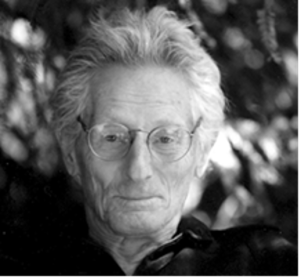
From an early age, John Lilly was fascinated by science. As a child, he stocked a makeshift laboratory with chemicals obtained from a local pharmacist and later subjected himself to physically taxing experiments while studying amino acid synthesis. Lilly never shied away from controversial subjects or discomfort, which ultimately led to many of his greatest discoveries and innovations.
Born in St. Paul, Minnesota on January 6, 1915, Dr. Lilly’s career spanned the 20th Century and ranged across an expansive swath of the scientific disciplines. Trained in the fields of neurophysiology, chemistry, medicine, electronics, and philosophy, Dr. Lilly’s innovations and inventions varied widely between instruments to measure high-altitude pilot gas pressures during World War II, to the first isolation tank developed to study sensory deprivation’s neurophysiological effects on the brain. Dr. Lilly also discovered “Lilly’s Wave,” a now-common means of electrically stimulating the brain, used in neuroprosthetics.
However, beyond his various inventions and “hard” science innovations, Dr. Lilly is perhaps best known for his other endeavors. Most know Dr. Lilly for his work in psychoanalysis, philosophy, and the questions of consciousness and alien intelligence. Specifically, he is popularly known for his controversial work with psychedelics and dolphins, his work in the Search for Extraterrestrial Intelligence, and his thoughts on artificial intelligence.
While some dismissed his research as provocative, nonsensical, and borderline-reckless, Dr. Lilly’s work pushed the boundaries of science and imagination, and many of his innovations are still in-use today. Dr. Lilly welcomed ridicule during his life, as his singular focus was discovery and knowledge: some considered Dr. Lilly’s experiments and work as speculative at best, but he is considered visionary by many. Dr. Lilly lived in the narrow lane between science and eccentricity, but Dr. Lilly dared when others lacked vision, and his legacy is as odd, intense, and brilliant as the man himself.
Author: Scott Findley