
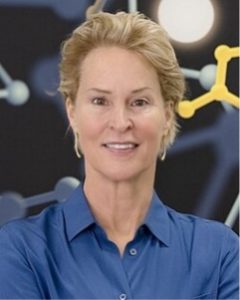
Photo Credit: Wikipedia
Frances Arnold is a chemical engineer, professor, and one of the most groundbreaking researchers in modern biotechnology. Dr. Arnold’s research in directed evolution, a technique that mimics natural selection to engineer enzymes, has transformed fields ranging from medicine to sustainable energy.
Although Dr. Arnold’s early career focused on sustainable energy technologies, her interests gradually shifted towards combining engineering principles with biological systems. In 1985, Dr. Arnold obtained a PhD in chemical engineering from UC Berkeley, and began a post doctorate position in biophysical chemistry. Here, she sought to use emerging DNA technology to engineer new enzymes.
Traditionally, natural evolution occurs over millions of years through random mutation and natural selection. Dr. Arnold realized that this process could be drastically shortened by introducing mutations into enzyme encoding genes and selecting enzymes that performed the desired function best. This process would then be repeated multiple times to improve enzyme performance. Dr. Arnold’s iterative experimentation proved to have particularly impactful results in the fields of pharmaceutical manufacturing, biofuel production, and green chemistry. Using directed evolution, Dr. Arnold’s laboratory has developed enzymes to catalyze reactions never before seen in nature, thus expanding the possibilities of industrial chemistry and biotechnology.
In 2018, Dr. Arnold was recognized for her work on phage display of peptides and antibodies and shared the Nobel Prize in Chemistry with her collaborators. She was also the first woman to win the Millenium Technology Prize, and is a fellow of numerous institutions, including the American Chemical Society.
In addition to these impressive accolades, Dr. Arnold is also listed as a co-inventor on over 40 patents related to directed evolution and biocatalysis. These patents cover engineered enzymes, methods for evolving proteins, and biochemical processes for producing fuels and chemicals.
Today, Frances Arnold’s legacy lies not only in her Nobel-winning research but also in the technologies her work has inspired. Through her patents, scientific discoveries, and mentorship, she has helped build the modern field of protein engineering, proving how natural processes can be transformed into one of science’s most powerful design tools.
Author: Katherine Chen